 Srpski
  Magyar
  English
Preface
Football is one of the oldest sporting traditions in the Senta municipality.
The people of Senta first encountered football in 1899, when the Senta Merchants' Youth Association invited the team of the Subotica Sports Club to their anniversary celebration to demonstrate the kicking game called "foot-ball."
1905 - 1930
On 23 July 1905, the "Senta Athletic Club 1882" held its reorganizational general assembly in the assembly hall of the town hall. The statutes were amended and a new board was elected. The association's new name became the Senta Athletic Club (ZAC), dropping the date 1882. The new president of ZAC was Dr. István Zákó.
In the following years, the Senta Athletic Club, as a comprehensive sports association, truly experienced its golden age. This was owed above all to president Dr. István Zákó, who was himself an outstanding athlete. Under his leadership the club pursued diverse, active work and held a highly distinguished place in the region's sporting life.

Football teams and associations generally played friendly matches, home and away, against the football teams of associations from the surrounding area (there being no official championship yet), on the occasion of some celebration or anniversary.
Football, together with the other sports, began to flourish, but in 1914 the First World War broke out.
Having survived the horrors of the First World War, in the spring of 1919 Senta's sporting life began to revive again, almost miraculously.
On 14 November 1920, the Senta Herald published decree no. 18850/1920 of the deputy prefect of Bács-Bodrog county, according to which all associations under the supreme supervision of the royal government that were still operating under statutes approved by the Hungarian government were obliged, from 1 October 1920, to draw up new statutes in line with the changed circumstances.
In the spring of 1921 the municipal police headquarters shut down the work of ZAK SE because of various nationality-related disturbances. Under the decree, not only was the association's property confiscated and its operation halted, but its pitch was also rendered unusable, having been ploughed under.
After these measures came into force, it seemed that the development of sport in Senta had been set back for a long time, but that was not how things turned out. Despite the police ban, the sporting appetite and love of sport among Senta's youth could not be suppressed. Illegal teams soon began springing up like mushrooms, operating without an official leadership or local police permit. The activity was spontaneous, but it nevertheless resulted in a dynamic sporting movement.
On 15 May 1923, a sports section was formed within the framework of the Senta Christian Merchants' Youth Association, which took the name Senta Athletic Club (SZAK). With this, the merchants' youth attempted to covertly revive the operation of the banned ZAK. The authorities eventually approved ZAC's statutes under the name SZAK on 15 October 1923, and the Minister of the Interior forwarded it to the town council under decision no. 15051/1923. For the newly formed sports section, the association purchased the plot of land it had been negotiating over for months, which it intended to develop into a sports ground in the Népkert (People's Park).
The managing president of SZAK was Pál Ferenci, and its administrator, and later also its coach, was Mihály Simon. By the autumn of 1928, from its founding through its first championship match, SZAK had played 26 matches, won 13, drawn 6, and lost 7.
SZAK's football team officially began its championship career in the 1923/1924 season. They were placed in Group "B" of Division II of the Subotica Football Sub-Federation. They played their first official championship match on 21 October 1923. After the autumn championship concluded, SZAK finished in 4th place with 8 points and a goal difference of 10:7.
On 3 February 1924, SZAK officially separated from the Christian Merchants' Youth Association and operated as an independent sports club. The managing president became Dr. Ferenc Keczeli Mészáros. The old ZAC's cross-striped jersey was replaced by a shirt with lengthwise black-and-white stripes.


After the spring championship of the 1923/1924 season concluded, SZAK finished 4th in Group B of Division II of the Subotica Football Sub-Federation, with 19 points and a goal difference of 29:14. At the following reorganizational general assembly, SZAK's leadership adopted several resolutions. Among other things, they planned to expand, fill in, and modernize the football pitch in the Népkert.
With this, the leadership wished to provide the best possible conditions for the increasingly popular and developing sport of football.
The popularity was also evident from the fact that crowds of 1,500-2,000 became the average for a match. In addition, a reorganization of the team was planned for the new season in order to achieve better results. The following team was fielded in the autumn championship: Rosenfeld, Hadler, Mezei, Lösch, Kovács, Gál, Kuklis II, Pajić, Éberl, Rácz Szabó, Tóth, Wolland, Bún, Borbély and Dancsó.
On 16 June 1925, sparing no expense, SZAK's leadership organized the first international football match in Senta. The professional Viennese team Ostmark appeared as guests. A record crowd watched the match, in which the Viennese team's performance bordered on juggling. The final result was 5:0 in favor of the Viennese.

On 8 July 1925, thanks to the agile leadership that spared no expense, SZAK played another professional Viennese team, this time Wienna-Kricketter. The result was 6:0 in favor of the Viennese.
SZAK won the 1925/1926 Division II championship of the Subotica Sub-Federation with 27 points and a goal difference of 59:8. The championship-winning team was: Nándor Kocsis, Lajos Hadler, János Borbély, Ferenc Bún, István Kuklis, Géza Kovács, Lajos Csonka, Ferenc Rácz Szabó, Skultéti, and György Nagy. The president was Dr. Branislav Pecarski, the coach Aladár Fall, the vice-president Dr. Ferenc Keczeli Mészáros, the section head Mihály Simon, and the administrator Frigyes Kis.
In the 1926/1927 championship, SZAK continued in Division I of the Subotica Sub-Federation.
1931 - 1960
For the 1931 championship season, at the suggestion of representatives of the rural associations, the board of the Subotica Sub-Federation split the 22 Division I teams into two groups. SZAK was placed in the Tisza group.
For the 1935 autumn championship season, the board of directors of the Subotica Sub-Federation again changed the existing championship classification, and SZAK was placed in Division I A.


On 12 April 1941, the Royal Hungarian Army entered Senta. Social life and sporting life also changed. The Senta Athletic Club (SZAK) changed its name to the Senta Athletic Club (ZAK).
In July-August 1941, the Hungarian Football Federation (MLSZ) organized the so-called "Homecoming Championship" for the teams of the "Southland," dividing the associations into several groups. ZAK was placed in group 11. Within the groups, the enrolled associations played a single round-robin championship decided by points and goal difference.
The players who most often appeared in the various matches were: István Kőrösi, Nándor Száraz, Lajos Juhász, Tibor Bicskei, László Vörös, Sándor Prohászka, István Keczeli, Péter Krizsán, János Borbély, István Tobák (Tábori), János Táborosi, József Kipp, Mihály Kurfis, Imre Markos, Lajos Lázár (Živojin Lazin), Miodrag Istvánfi (Stepančev), János Vreckó (Vereczkei), György Lakatos, József Gondi, Frigyes Zentai, Antal Budai, István Jablonszki, Vince Újházi, Prágai, Kis I, Kis II, Hadler, Nyilas, Bicskei, Polyák, Bene, Balogh, Domány, Eszes, Nagyabonyi, Garashy, Pusztai, Polgát, Kéri I, Kéri II, Bíró, Pálfi Kovács and Bóvíz. Over the years, several players who spent shorter or longer periods doing their military service in Senta also appeared for the team.
In the interest of developing local football, ZAK's leadership signed well-known coaches from Budapest, among them József Nyilas (Nick), Rezső Vetzel, and later Imre Markos, who was a multiple-cap Hungarian national football player.
The growing hardships and difficulties of the war years were increasingly reflected in sporting life as well. As a result, MLSZ repeatedly worked out new group classifications.
During the Second World War, however, in September 1944 the front line drew ever closer to our town. On 24 September, the championship football match against Kiskőrös was already cancelled. On 8 October 1944, the Red Army entered Senta.
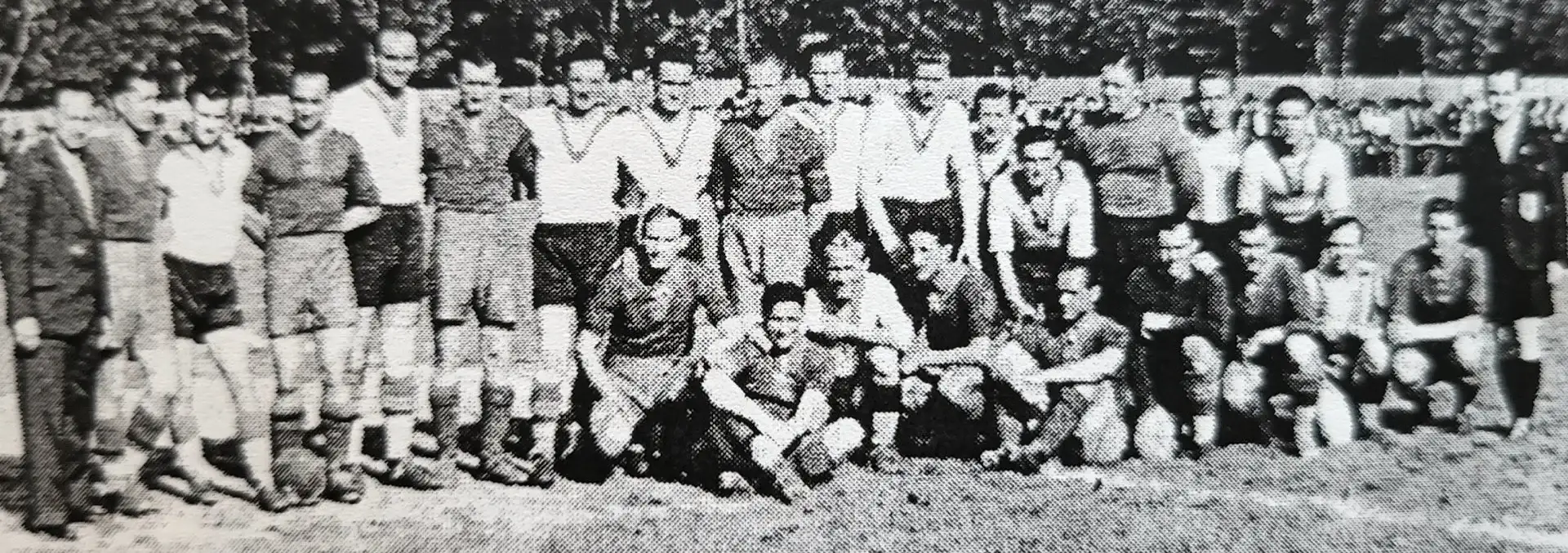


On 7 April 1945, the People's Liberation Committee dissolved the activity of every sports association operating until then; in May 1945 a new sports association was founded in Senta under the name Jedinstvo.
On 10 May 1948, Jedinstvo changed its name to Pobeda.

For the 1950 season, following reorganization and a merger, the team began playing in the Vojvodina league under the name Senta.
After the qualifying rounds, the squad size was increased to 13 members. To everyone's surprise, the champion of the 1950 Vojvodina league was Senta, who advanced to the unified Serbian league.
The president of the Senta football club was Dušan Krivokapić, the vice-president Frigyes Kiss, the secretary Frigyes Lukinich, the doctor Dr. Imre Müller, the political officer Vuko Vučković, the financial officer Gyula Lavicska, and the coach Miodrag Stepančev.


In 1951, Senta began the unified Serbian league with great momentum. In their first home match they defeated Budućnost of Valjevo 2:1, then beat Dubočica of Leskovac 5:1. After that they drew 1:1 with Radnički of Niš in Senta, but won the return leg in Niš 4:1! They also beat the excellent Oktobar 6 of Kikinda 3:0. However, this great momentum was followed by several dips and weak performances. The 24 points earned from 26 matches and even a positive goal difference were not enough to stay in the league, and following the reorganization they were relegated to a lower division.
The following played for Senta: Branko Kablar, Božidar Jovović, Ferenc Homolya, László Vörös, Géza Vörös, Bozsidar Fogaras, István Horváth, István Urbán, Nándor Fajka, Novak Roganović, Pál Kálmán, Vilmos Zsárkov, Lajos Juhász, Nándor Száraz, Sándor Heinrich, Mihály Kurfis, Lajos Deák, András Tóth, György Renkó, Bogdan Čolović and Ivan Dimitrijević. Coaching duties were carried out by Dezső Borbély and István Kőrösi.

In 1953 they finished 6th in the Vojvodina league, and 8th in 1954. Since a further reorganization followed, they advanced to the Northern Serbian league.
Senta could not hold their place, fell back, and in the following 1954/1955 season, during the reorganization, they ended up in the North-Bačka league.
In the 1955/1956 season they played in the North-Bačka league, as they also did in the 1956/1957 season.
1961 - 1990
Unfortunately, the following years brought a slump, and the team was relegated to the Subotica league. Indeed, in the 1962/1963 season they could only stay up after an additional play-off match. They had to play against Zitopromet, the champion of the Senta league, to preserve their place. The blue-and-yellows managed to win 6:1 and 4:0. The club's entire leadership was then reorganized. Pál Tóth Horgosi became president, Bozsidár Fogaras secretary, while the sporting leadership was entrusted to István Urbán. Thanks to the new leadership, the club's fortunes took an upward turn.
In the 1963/1964 season, they finished 4th in the Subotica league. Having advanced in the 1964/1965 championship, they already played a significant role in the Vojvodina league.

In the 1965/1966 season, Senta's football team won the Vojvodina league championship for the second time since its founding, ahead of Slavija of Novi Sad.
In the decisive match in Senta, the result was 0:0 against Slavija in front of 3,000 spectators, but there had perhaps never before been such a festive procession in the town as took place that afternoon before the match, not to mention the evening celebrations.
Senta scored 115 goals during the championship, finishing 3 matches with a double-digit result. They were dubbed the "atomic forward line," represented by Ferenc Kispál, Gyula Pintér, Milan Bakajić, József Ábrahám and István Bajusz.
In the 1966/1967 season, Senta played in the Northern group of the Serbian league. Unfortunately, once again they only managed to stay in the higher division for a single season. Senta finished fourth from the bottom with a goal difference of 42:53 and were relegated.


In the 1967/1968 football season, Senta won the Vojvodina league championship for the third time. That year a major reorganization followed: the two Division II slots were turned into four, and the Serbian league slots were also expanded. Senta was placed in the Northern group of the Serbian league. Since it was made up solely of Vojvodina teams, it was given the name Vojvodina League.
In the 1968/1969 and 1969/1970 seasons, the team played in the Vojvodina league with mixed success.
In 1970/1971 they fought to stay in the league - successfully.
At the end of the 1972 autumn season they were still in fourth place, but in the spring they slipped down to the middle of the table.
The following played: András Bognár, Péter Nagy Némedi, László Győri, Mihály Sóti, Ferenc Szorcsik, Jovan Ćušić, Boško Tevdenić, László Fényszárosi, Borivoj Božić, István Sárkány, István Gligor, Péter Krizsán, Gyula Pintér and Károly Horváth Kátai. Coaching duties were carried out by István Márkus and Slavko Milošević. The section head was Nándor Fajka.
In the 1973/1974 season they finished second-to-last and were relegated from the Vojvodina league.
In the 1974/1975 season, Senta's football team dropped into the Subotica league and remained there for quite a few years. The section head was Bozsidár Fogaras, the coach István Bajusz.
In the 1978/1979 season they won the Subotica league championship. To advance to the Vojvodina league, they played against Jedinstvo of Novi Bečej. They won 3:2 in Senta, but lost the return leg 4:1.


In 1980, on the club's 75th anniversary, the Yugoslav national team played in Senta. The coach was Borivoj Božić, the section head Nikola Pjevač.
The Yugoslav national team lined up as follows: Sujić, Bajević, Jovanović, Janjanin, Muslin, Sušić, Zajec, Jelikić, Stojković, Petrović, Kranjčar, Slišković, Repčić, Pašić, Varga and Bogdan.

Senta's team in the first half: Branislav Markov, István Miklós, Károly Birkás, Mile Ilijin, Antal Rózsa, Ferenc Recskó, Mladen Kerleta, László Ágoston, Đorđe Vukmirović, Milovan Štrbački, Milan Todorović (captain); the second-half players: Ivica Žmukić, József Kitli, Bata Ilijin, Dragoljub Bukvić, Ilija Gvozdenović, Endre Lakatos, Zoltán Gyólai, Mihály Barna, Béla Sablatura, Nikola Žmukić, Milan Todorović and Đorđe Kontić.
In the 1982/1983 season they finished the championship in the top group of the Subotica league. During the league reorganization they advanced to the Bačka league, but stayed there for only one year.
In these years the coach was György Major, the section head Nikola Pjevač. The players: Ivan Žmukić, Nikola Žmukić, Branislav Markov, Milovan Štrbački, Zoran Jovanović, Károly Birkás, Antal Rózsa, Đorđe Roganović, Mihály Barna, József Kitli, Milan Petrović, Rade Pecarski, Branislav Bulatović, Imre Sövényházi, Győző Katona, Predrag Đurović, Lajos Harmat, István Miklós, Árpád Kisbicskei, Róbert Csúzdi, Zoltán Ágoston, István Faragó, József Stanišić and Csaba Györe; later on the following also played: Ferenc Dukai, Nándor Cvitkó, Branko Potpara, Iván Faragó, Zoran Nikolić, Zoltán Böködi, Zoltán Fehér, Dušan Vukov, László Gyetvai and Oszkár Füstös.
From the autumn of 1983 until the spring of 1988 they played in the Subotica league with mixed success. At that point they became Subotica league champions and played the 1988/89 season in the Bačka league. However, that field proved too strong, and after a year Senta again found itself in the Subotica league.
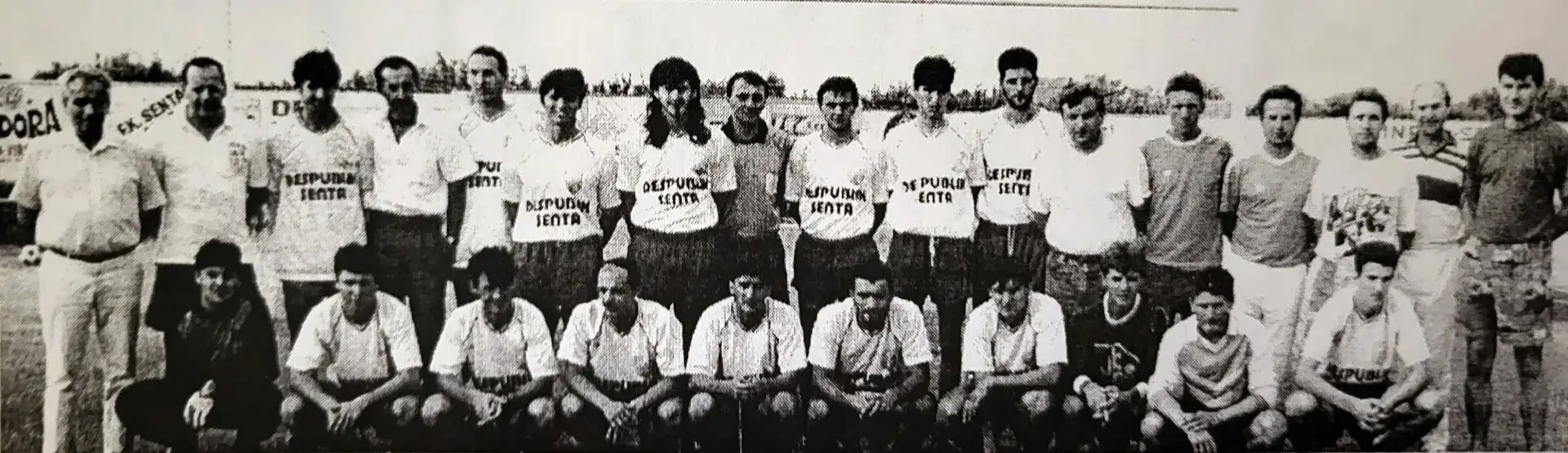
In the period 1987-1990 the following played for Senta: Károly Birkás, Branislav Markov, József Kitli, Predrag Đurović, Antal Rózsa, Zoran Nikolić, Zoltán Ágoston, Tibor Hun, Róbert Csúzdi, Iván Faragó, József Stanišić, Győző Katona, Rudolf Novák, Branko Potpara, Róbert Belec, Lajos Harmath, Attila Gajda, Zsolt A. Tóth, Róbert Faragó, Róbert Kovács, Ernő Paku, Predrag Matić, József Verba, László Kis Jovák, Róbert Borsos, Vladimir Vitković, Róbert Matok and Ferenc Dukai. Until 1988 the coach was György Major.


1991 - 2005
For the 1991/1992 season Senta grew stronger and finished second in the Subotica league. To advance to Vojvodina League II, they played a qualifying match against Tekstilac of Odžaci. The result in Odžaci was 1:4, and at home 4:1 in Senta's favor. They secured their place in the Bačka league on penalties. The team consisted of József Kitli, Predrag Đurović, Momir Tanasković, Mladen Simendić, József Özvegy, Béla Rudics, Branislav Gvozdenović, Vladimir Vitković, Róbert Matok, Károly Birkás, Róbert Csúzdi, Ljubiša Budovalčev, Lajos Harmat, Tibor Bontovics and Mladen Krstajić.
In the 1992/1993 season, having advanced to Vojvodina League II, they secured 4th place. The coach was Mihály Sóti. Team members: Mladen Krstajić, József Özvegy, Momir Tanasković, Esad Beharić, Zsombor Kerekes, Branislav Gvozdenović, Béla Rudics, Róbert Belec, Slavko Vučić, Mladen Simendić, Róbert Kovács, Dejan Simendić, Vladimir Radulović, Lajos Harmath, Róbert Matok, Róbert Borsos and Tibor Bontovics.
In the 1994/1995 season, in Vojvodina League II, they finished the championship in last place with a goal difference of 29:147. This was the low point in the club's history.
In the 1995/1996 season they dropped into the Subotica league, but the slide could not be stopped. They were relegated from there too. The situation seemed hopeless, and it did not take much for Senta football club to close its doors. In 1996 Senta football club held new elections. Thanks to the new president's effective support and the whole board's energetic activity, the club did not cease operating - indeed, it was able to renew itself and move forward. The team ended up in the Tisza-region league.
In the 1996/1997 season, Senta became champions of the Tisza-region league with 48 points and a goal difference of 79:8.
Senta's football team became champions of the 2001/2002 Subotica league and advanced to the Northern group of Vojvodina League II.
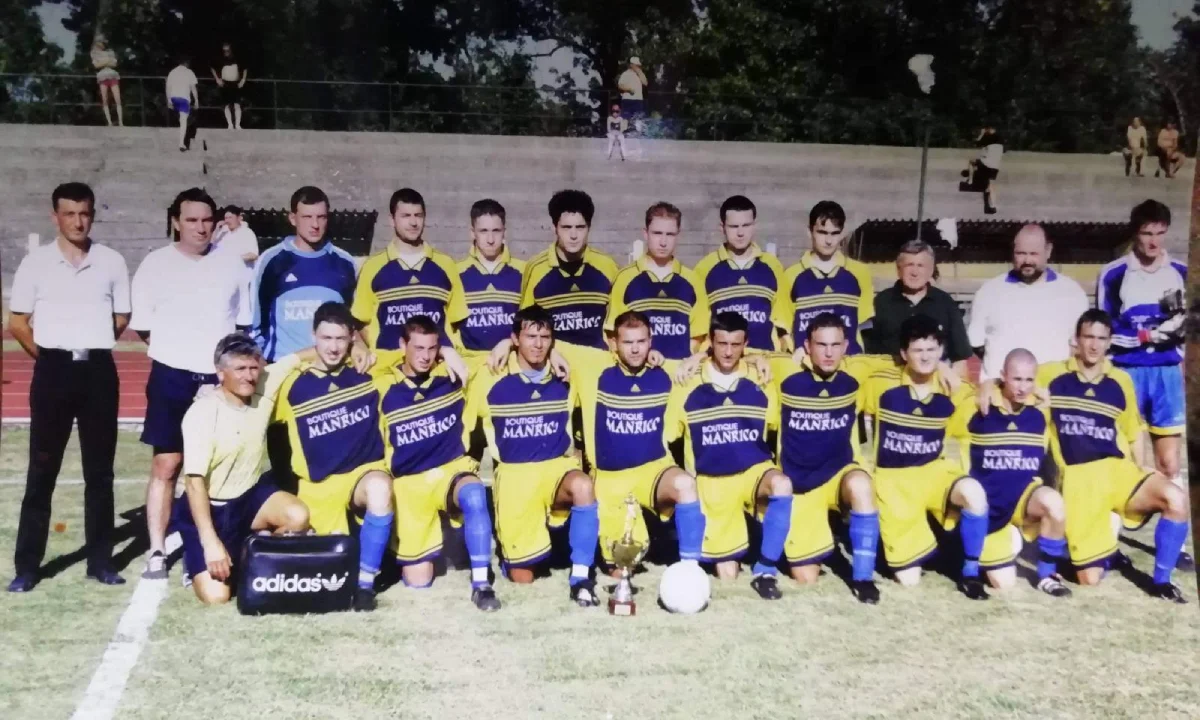
The president was István Bajusz, board members were Predrag Đurović, Róbert Berta, Siniša Kovačev and Miroslav Škrbić.
Coaching duties were carried out by József Özvegy and Branislav Bulatović.
The championship team included: Rudolf Novák, Ákos Homolya, Zsolt Kávai, Dejan Bradić, Marko Glušica, Damir Zec, Gábor Molnár, Gruja Stefanov, Dušan Radonić, Goran Cirić, István Gyatkó, Attila Andruskó, Novica Dragoljević, Ivica Terzin, Miodrag Đukić, Žarko Petković, Damir Milošević, Ottó Vastag, Branislav Bulatović, Zoran Matok and Lóránt Oláh.
As league champions, in keeping with tradition, Senta's team played the league's representative selection at the end of the championship. On 22 June 2002, Senta beat the Subotica league selection 4:2. The match between Senta's youth and the Subotica league selection ended 0:6, while the younger Senta youth beat the Subotica league selection 2:0.
In 2002, Senta's youth football system was pleasingly represented by several age groups. The junior team was made up of Tamás Özvegy, Huba Tóth H., Iván Donát, Goran
Pupovac, Aleksandar Simić, Srđan Faragó, Srđan Živkov, Mario Kecman, Vukan Nikolić, Milan Plavšić, Sandi Beharić, Róbert Kovács, Ferenc Kovács, Mátyás Habram, Radoje Potpara and Róbert Hangya. The coach was Róbert Matok.
The cadet team was made up of Tamás Özvegy, Sandi Beharić, Radojica Potpara, Srđan Živković, Goran Živković, László Tóth, Kornél Törteli, Kornél Gombos, Gábor Pilisi, Péter Katona, Kornél Körmöci, Szebasztián Körmöci, Roland Megyeri, Nenad Škrbić, Nikola Pavlović, Nemanja Nikolić, Bojan Faragó, Balázs Aulik, Dániel Márki and Vladimir Mandić. The coach was András Bognár.
In the younger cadet team, Csaba Tóth, Sándor Gyertyás, Eduárd Csányi, Igor Stojkov, Viktor Olajos, László Horváth K., Alen Bicskei, Attila Tóth, Adrián Körmöci, Ákos Hegedűs, Attila Rudics, Zoltán Kovács, Norbert Pehó, István Nagy A., Petar Filipov, Nemanja Kondić, Saša Petrović, Miodrag Mandić and Igor Lazić played. The coach was Róbert Csúzdi.
In the 2003/2004 season a league reorganization took place. Senta's football team was placed in the Northern group of the Vojvodina league and finished the season in 9th place.
In the 2004/2005 season the club finished 6th.

Senta's football team on 23 February 2005:
Nikola Žmukić (coach), Goran Žmukić, Bojan Faragó, Attila Győri, Nenad Škrbić, Dejan Stanojev, Gruja Stefanov, Srećko Jelić, Vukan Nikolić, István Tóthmélykúti, József Özvegy (coach), Željko Nikolin, Tamás Özvegy, Csaba Kószó, Lajos Kiss, Szebasztián Körmöci, Nemanja Nikolić, Nedeljko Terzin, Gyula Kovács (masseur) and Peter Dragin.
100th Anniversary
Senta vs. Serbia and Montenegro
In 2005 the club celebrated the 100th anniversary of its founding, in honor of which, at 3:00 PM on 26 March 2005, it played a jubilee football match against the national team of Serbia and Montenegro.
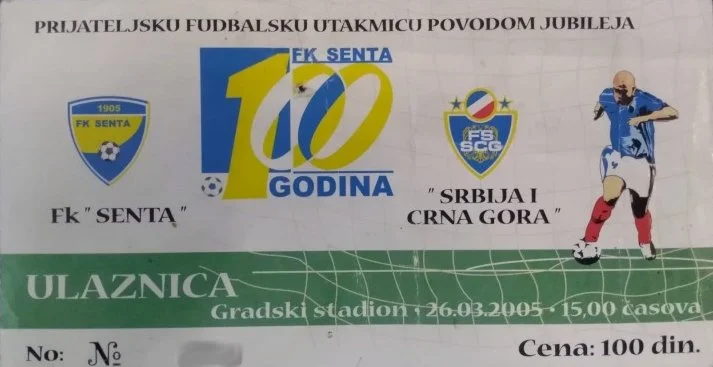
The match was played in front of a record crowd of around 5,000 spectators.
There were so many people there that the town could not even count them all, since some paid and some did not. And yet the entrance fee was not expensive (it cost 100 dinars).
Just ask the most sought-after man of the week before the match, Gyufi (RIP), the ticket seller, who alone sold 1,200 tickets; in total, 3,900 tickets found buyers.
Even those who didn't pay somehow got in: either as journalists, as guests of honor, or through the fence.
Nobody wanted to miss this event, since the locals see the national team about as often as a white raven. They had last visited Senta 25 years earlier, when preparing for a qualifier for the 1982 World Cup in Spain. Senta suffered a similarly heavy defeat that time too (6:1), but only half as many spectators had been curious to see it.

It wasn't only the people of Senta who were curious - the people of Bečej signaled their presence with a flag, and people from Čoka, Ada, Kanjiža, Kikinda and elsewhere have been talking about the match ever since.
Even representatives of the Spanish media found their way to Senta, the small Vojvodina town about which they only knew that national team player Mladen Krstajić had been born there - which, of course, isn't true.
Two scouts of Spanish national coach Luis Aragonés also mingled among the spectators, their job being to assess how Spain's opponent in tomorrow's World Cup qualifier would fare against József Özvegy's team.
József Özvegy, Senta's coach, said: It was a huge event, not only for the club, but for the entire town, and indeed for the football-loving public of the surrounding settlements as well. We managed to mobilize around 5,000 people, so it can rightly be said that we celebrated our jubilee in a fitting way. The players have been talking about the match nonstop ever since. It was an experience for us that we will never forget. Before the match I drew my players' attention to two things: try to give your best, and be very careful not to cause any injuries.
Statement by the national team's coach: The players took the match seriously. We are extremely satisfied with the hospitality, and we were especially pleased with the large crowd, since one rarely sees such a thing in small towns, or even in Belgrade.
The line-ups:
Senta: Özvegy (Tóth Mélykúti), Stefanov (Kiss), Stanojev (Zec), Žmukić (Homolya), G. Molnár (Dragin), Győri (Škrbić), N. Nikolić (Kószó), V. Nikolić (N. Terzin), Nikolin (I. Terzin), Jelić (Körmöci), S. Faragó (B. Faragó).
Serbia and Montenegro: Jevrić, Basta (Koroman), Vidić, Krstajić, Gavrančić (N. Đorđević), Mladenović (Duljaj), Dragutinović, Ilić (Stanković), Milošević (Kežman), Vučinić (Jestrović), Vukčević (P. Đorđević).
Scorers: Vučinić in the 25th and 28th minutes, Ilić in the 27th, Kežman in the 58th, 59th and 90th, and Koroman in the 85th minute.

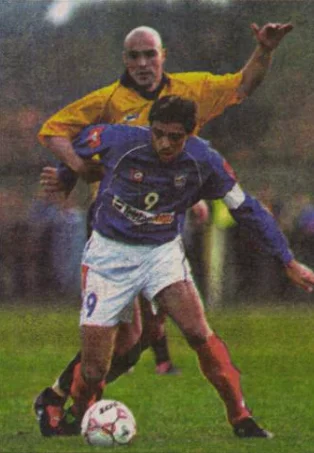

The goals:
25': Özvegy brilliantly saved Savo Milošević's shot, but the ball fell to the unmarked Vučinić, who put the national team ahead from close range (1:0).
27': Senta lost the ball in front of their own penalty area, allowing Ilić a chance, and he calmly rolled home a ball passed in from the right (2:0).
28': Vučinić's second goal. Following another lost ball, the Lecce player took it down with his chest on the left side of the box and fired it into the bottom right corner (3:0).
58': A goal worthy of a beauty prize. Dejan Stanković curled a left-sided corner into the middle with the outside of his right foot, and Kežman sent it into the net first time. It was gorgeous (4:0).
59': Kežman received a good ball, which he skillfully chipped over the towering goalkeeper Tóth Mélykúti (5:0).
85': The ball rebounded off the post to the completely unmarked Koroman, whom not even the goalkeeper could unsettle (6:0).
90': Mateja Kežman saved something to see for the very end. The Chelsea player fired from 25 meters and scored the finest goal of the match, setting the final result (7:0).
Senta vs. Ferencvaros
The other highlight of the anniversary year came on 26 June 2005, when Ferencvaros played a friendly in Senta. The Budapest club is still one of the most popular foreign teams across the former Yugoslavia, and around 1,500 spectators came to watch. Kick-off was delayed by a good three quarters of an hour: the visitors' bus got lost after crossing the border, and a police patrol had to escort it to the stadium. Fans hoping to see Lajos Szucs and Peter Lipcsei were disappointed, as both missed out through injury.
FK Senta – Ferencvaros 0:6 (0:3)
Senta, Gradski stadion, approx. 1,500 spectators, referee: Kovacs.
Goalscorers: Timar, Bajevski 2, Laczko 2, Domokos.
Senta: Ozvegy, Molnar G., Homolya, Terzin I., Koszo, Nikolin, Komljenović, Stefanov, Stanojev, Gyori, Kormoci. Also played: Kovacs, Škrbić, Trolić, Savić, Feher, Vastag, Kis, Terzin II.
Ferencvaros: Udvaracz (Kemenes), Timar, Budovinszky, Balog Z., Huszti, Sowunmi (Laczko Zs.), Takacs A. (Domokos), Tozser (Gyori), Nogradi, Bartha (Szalai T.), Bajevski (Horvath D.). Also played: Lajer.
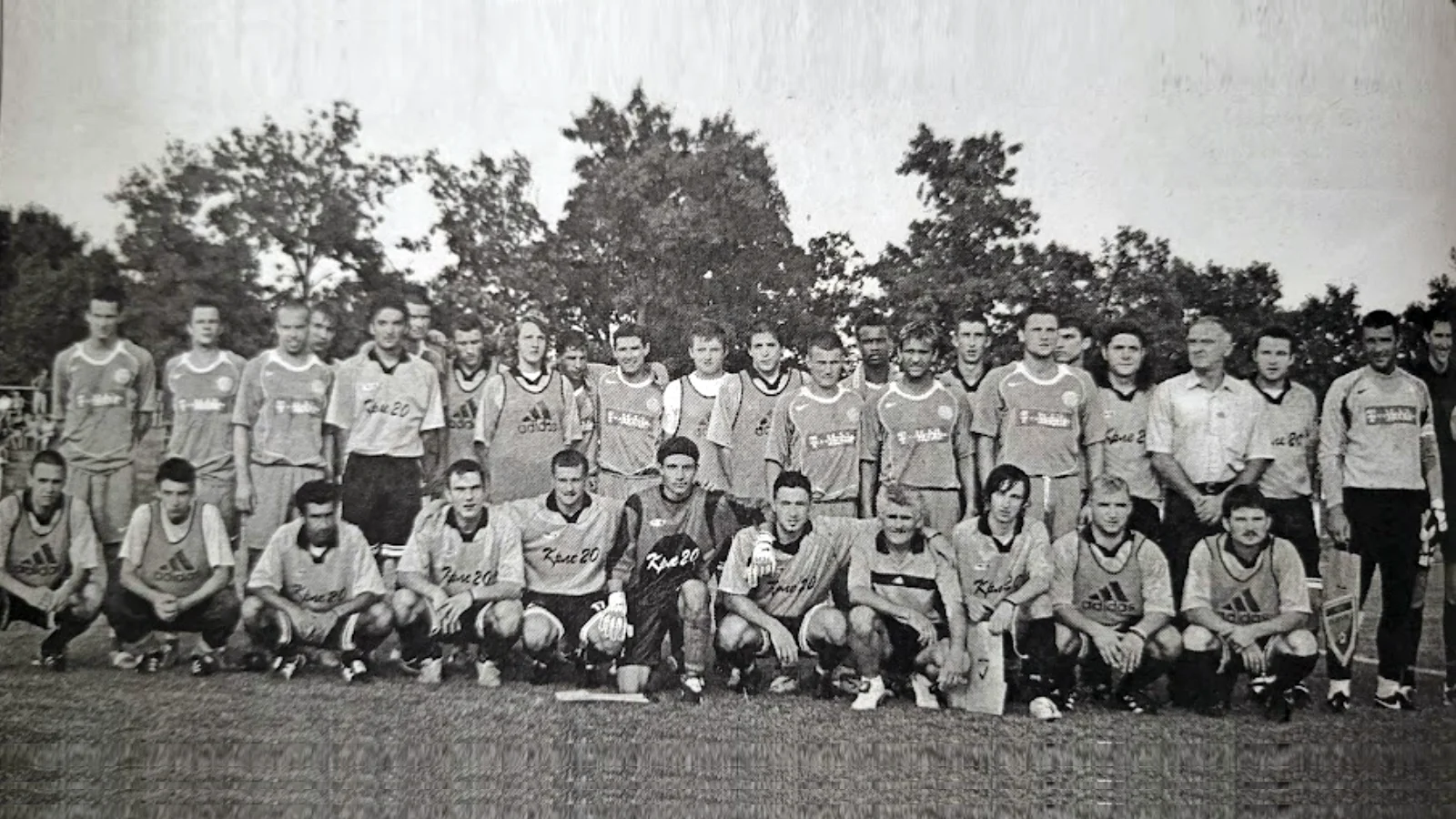
The visitors were in control from the first minute. Timar, making his Ferencvaros debut that day, opened the scoring, and Bajevski struck twice to make it 0:3 at the break.
Almost exactly with the half-time whistle a heavy summer downpour hit the ground, and most of the crowd left the stands.
Senta had a huge chance at the start of the second half, but Kemenes made a superb save. Laczko then scored twice and Domokos once to complete the 0:6 win.
2006 - 2020
Senta won the 2007/2008 Vojvodina league, one point ahead of Polet of Karavukovo, and with this advanced to the Vojvodina group of the third-tier Serbian League.
From the 2008/2009 season, the team played in the Vojvodina group of the Serbian League, where it finished 6th in its first year.
Senta vs Kaposvár
On 8 July 2009, Senta's footballers tested their strength in a friendly match against Kaposvári Rákóczi of the Hungarian NB I. The visitors triumphed 2:0, with the goals scored by Odics and Nemanja Nikolić, a former Senta academy product. The match was watched by 500 spectators, and the home side also featured a former Kaposvár player, Tibor Nagypál.
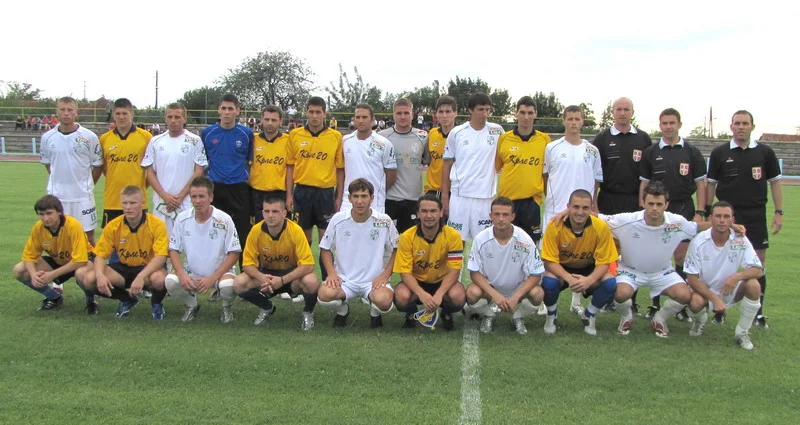


Senta football club also played further friendly matches: on 11 July 2009 against Subotica's Spartak Zlatibor Voda of the Serbian top flight, and then on 18 July 2009 against Kozármisleny, playing in the Hungarian second division.


In the 2009/2010 season the team finished mid-table, in 8th place.
After that it stabilized in mid-table: it finished 4th in both the 2010/2011 and 2011/2012 seasons.
Senta vs Partizan
On 31 August 2011, Senta hosted a prestigious guest: at home they faced the squad of Serbian top club Partizan Belgrade in a friendly match, and to everyone's surprise defeated the capital's side 3:2.
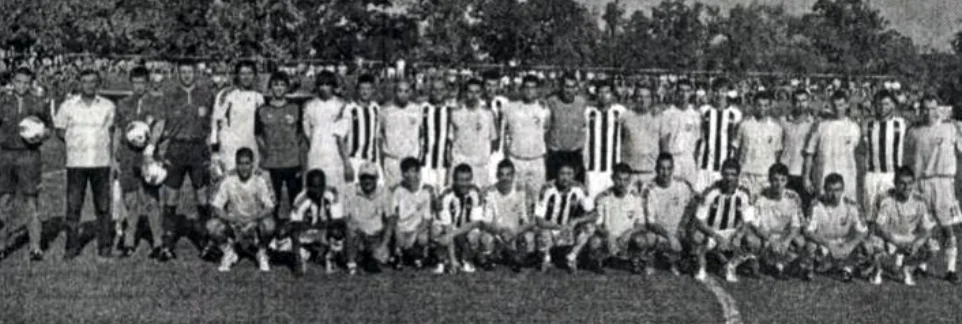
Senta's starting eleven was: Boriša Bodiroga, Dániel Farkas, Boja Kakaš, Milan Radin, Marjan Cvetković, Goran Grujić, Dušan Jović, Lazar Popov, Ivan Kurtušić, Nebojša Đukić and Aleksandar Beslać. Also played: Vukobrat, Vojvodić, Đeri, Vasin, Pankarićan, Mandić, Žmukić.
Partizan's starting eleven: Vladimir Stojković, Aleksandar Miljković, Vojislav Stanković, Nemanja Rnić, Anderson Marques, Aleksandar Ranković, Milan Smiljanić, Dejan Babić, Saša Ilić, Marko Šćepović and Lamine Diarra. Also played: Petrović, Lazevski, Jovančić.
Senta's goals were scored by Beslać, Farkas and substitute Vasin, while both of Partizan's goals came from Diarra.
In the 2012/2013 season they finished 7th, and in 2013/2014, 6th.
In these years (2011-2014) the following players played for the team:
Attila Andruskó, László Andruskó, Strahinja Banov, Darko Baštovanov, Aleksandar Beslać, Boriša Bodiroga, Radiša Bogdan, Miloš Bokić, Nemanja Bošković, Marjan Cvetković, Csaba Domonkos, Attila Győri, Nebojša Đukić, Mirko Đurić, Ognjen Đuričin, Dániel Farkas, Branislav Gecić, Goran Grujić, Boris Gujić, Goran Habenšus, Đorđe Ivanović, Dragan Jančič, Nemanja Janković, Bojan Josimović, Dušan Jović, Bojan Kakaš, Zoltán Kávai, Janko Kulić, Sebastijan Kuntić, Ivan Kurtušić, Mirko Malinović, Miodrag Mandić, Stevan Martinović, Bojan Matić, Miljan Milivojev, Milan Misić, Milan Nedučić, Vitomir Nikolin, Filip Pankarićan, Aleksandar Panić, Dániel Pócs, Lazar Popov, Milan Radin, Goran Radišić, Ratko Radulović, Mihajlo Raičević, Momčilo Rudan, Stefan Rudan, Stanislav Sarapa, Marko Sekeruš, Marko Spahić, Nenad Stojisavljević, Dejan Sunić, Nikola Šarenac, Dušan Štrbac, Stefan Tomišić, Norbert Ujházi, Nemanja Vasin, Nemanja Vojvodić, Mladen Vukasović, Danilo Vukobrat, Marko Vukobrat, Marko Zečević, Marko Živkov, Dragan Žmukić.


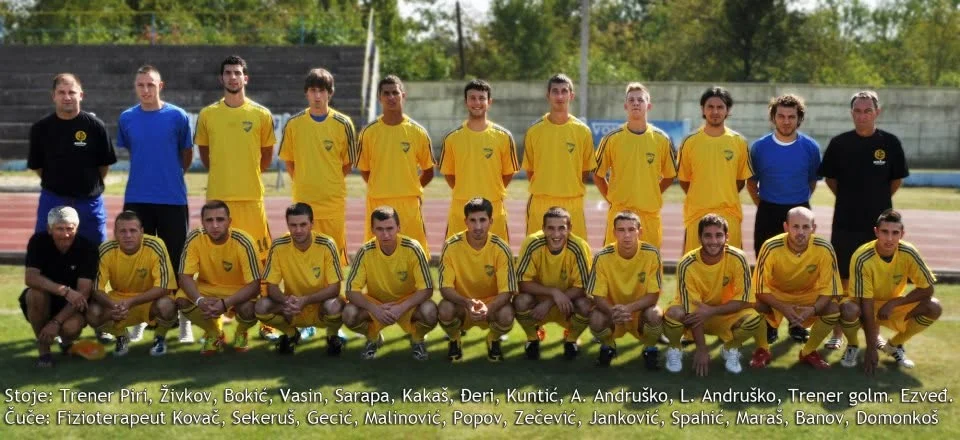
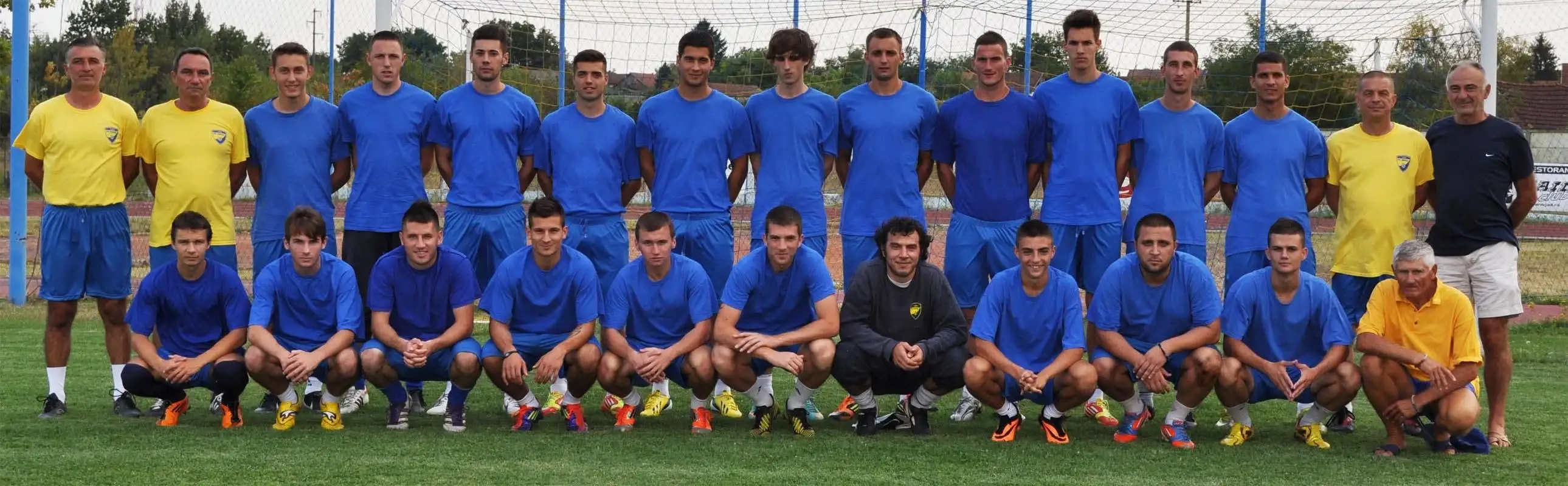
The team achieved its best result in the 2014/2015 season: it won the autumn portion, but ultimately finished the championship in second place.
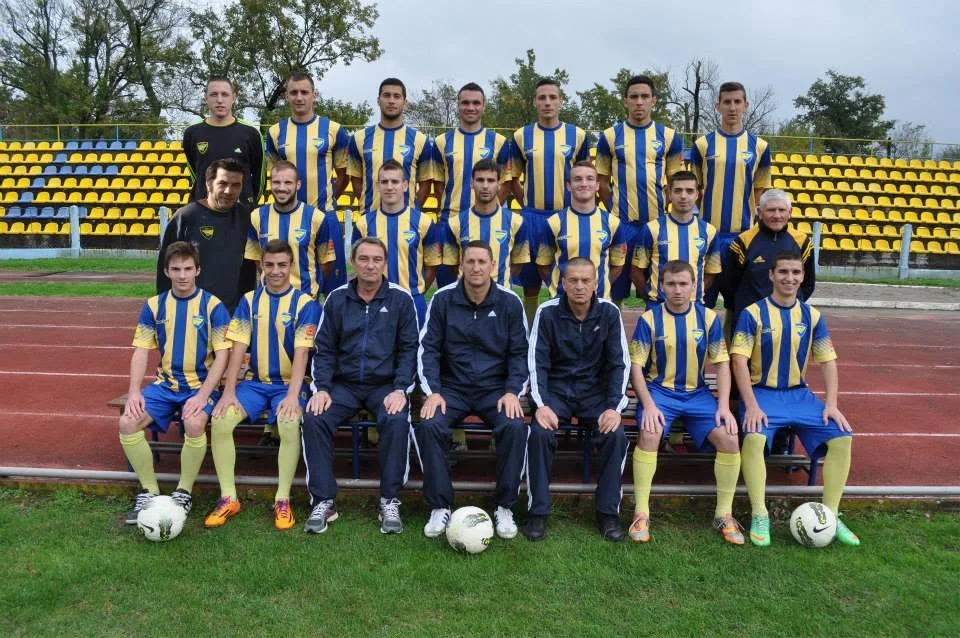
That year, coaching duties were carried out by Zoran Ćirić.
Board/staff members: Đorđe Roganović (delegate), József Özvegy (assistant coach), Goran Lazić (doctor), Gyula Kovács-Gyufi (physiotherapist).
Players: Marko Živkov (goalkeeper), Bojan Matić, Marjan Cvetković, Branimir Jočić, Miljan Milivojev, Nemanja Marković, Dušan Štrbac, László Andruskó (goalkeeper), Milan Misić, Aleksandar Beslać, Janko Kulić, Đorđe Ivanović, Bojan Josimović, Dániel Pócs, Ognjen Đuričin, Lazar Popov, Stefan Tomišić, Nenad Stojisavljević, Ratko Radulović.
The team finished the following, 2015/2016 season in 4th place, but due to the club's financial difficulties, it had to start the next season not in the usual 3rd tier, but in the 5th.
After the setback, the team was gradually rebuilt: within the PFL Subotica league it finished the 2016/2017 season in 3rd place, 2017/2018 in 9th, 2018/2019 in 8th, and 2019/2020 in 6th.
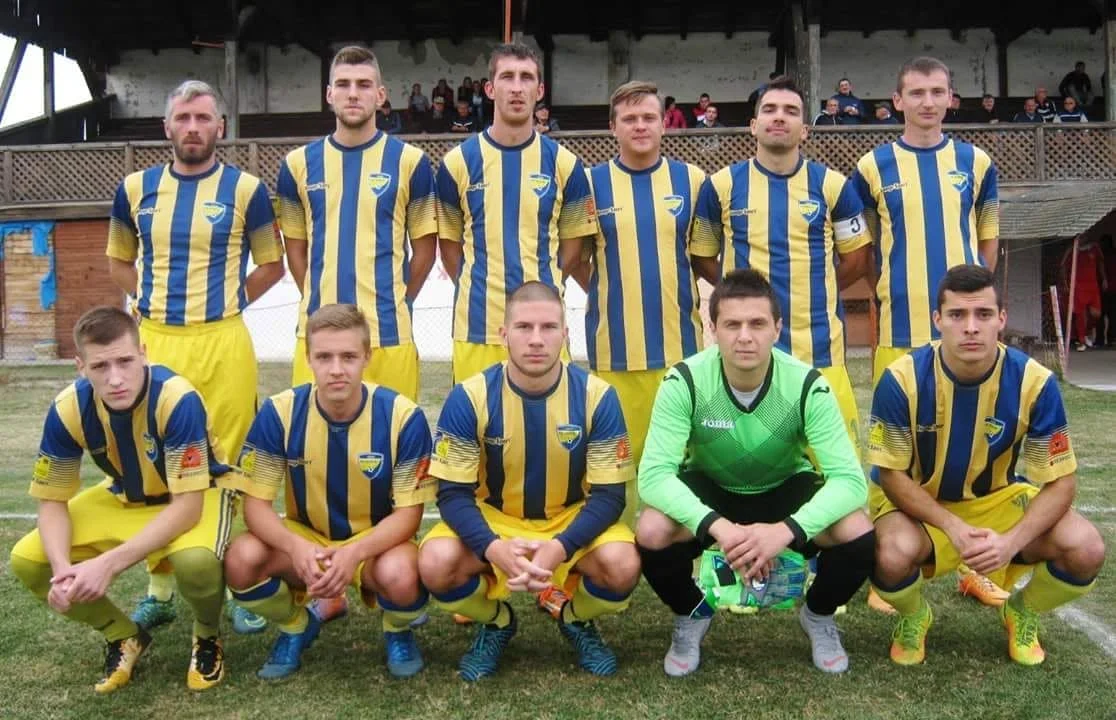
The persistent work bore fruit in 2020/2021: the team won the championship, thereby earning promotion to the Northern group of the Vojvodina league.

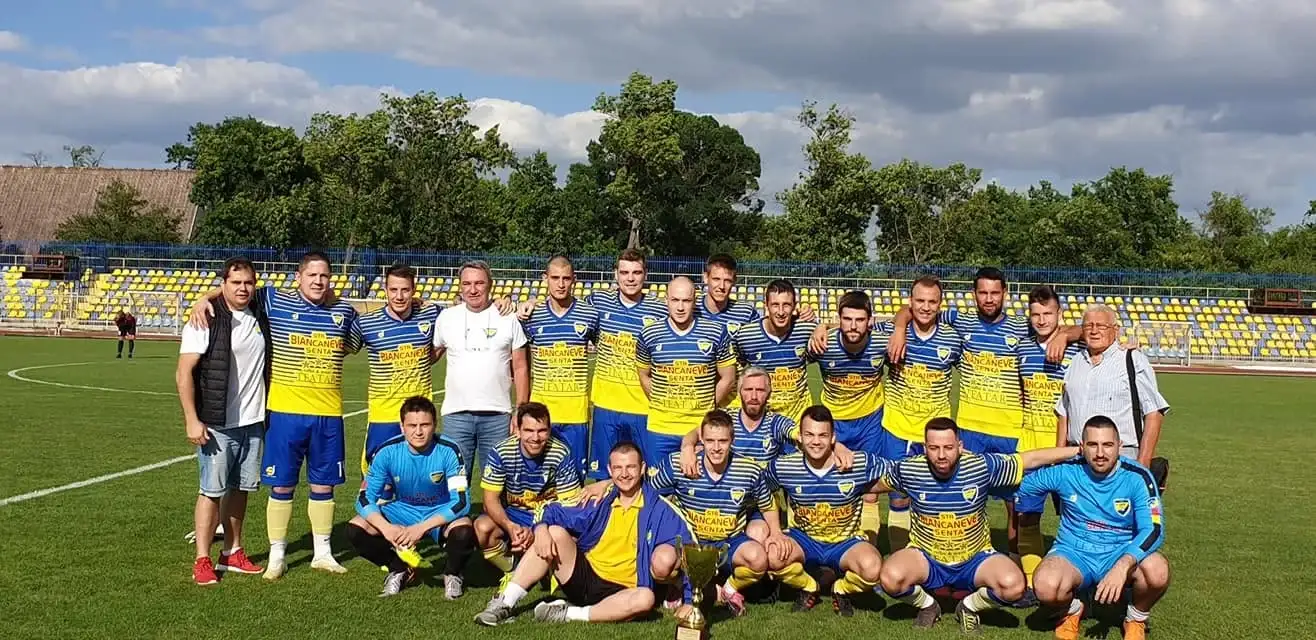
2021 -
In the higher division, the team finished 6th in the 2021/2022 season, but the 2022/2023 season proved difficult: it finished 15th, and thereby once again bid farewell to the Vojvodina league.
The team began the 2023/2024 season back in the PFL Subotica, where it finished 9th, then in the 2024/2025 season, showing significant improvement, finished 4th. It closed the 2025/2026 season in 8th place.


Afterword
First of all, we owe thanks and gratitude to László Táborosi, without whom the club's historical account could not have come into being - most of this content comes from his book.
Besides him, however, there is still so much and so many people that could be mentioned that they could fill an entire book.
A great many good people have passed through the club - from players, through coaches, to all the helpers - and the club is grateful to all of them for the fact that it has been able to survive for so many years, and that its story can continue to be written.
We would like to highlight a few people who have done a great deal for the club in recent times.
József Özvegy
József Özvegy (Joca), known to everyone at the club simply as "Uncle Joca," was not only an outstanding goalkeeper for the team in his day, but for nearly three decades also served Senta football as a coach and secretary - a good number of excellent players emerged under his guidance, and for decades he was the one announcing the results and dictating the match reports. In June 2022, at the season's final championship match (Senta-Bajsa 0:0), he was officially given a send-off, and he himself put it this way: "this is a community from which you can't simply retire." The club is immensely grateful to him for his many years of unbroken work.


Gyula Kovács "Gyufi"
1954–2017
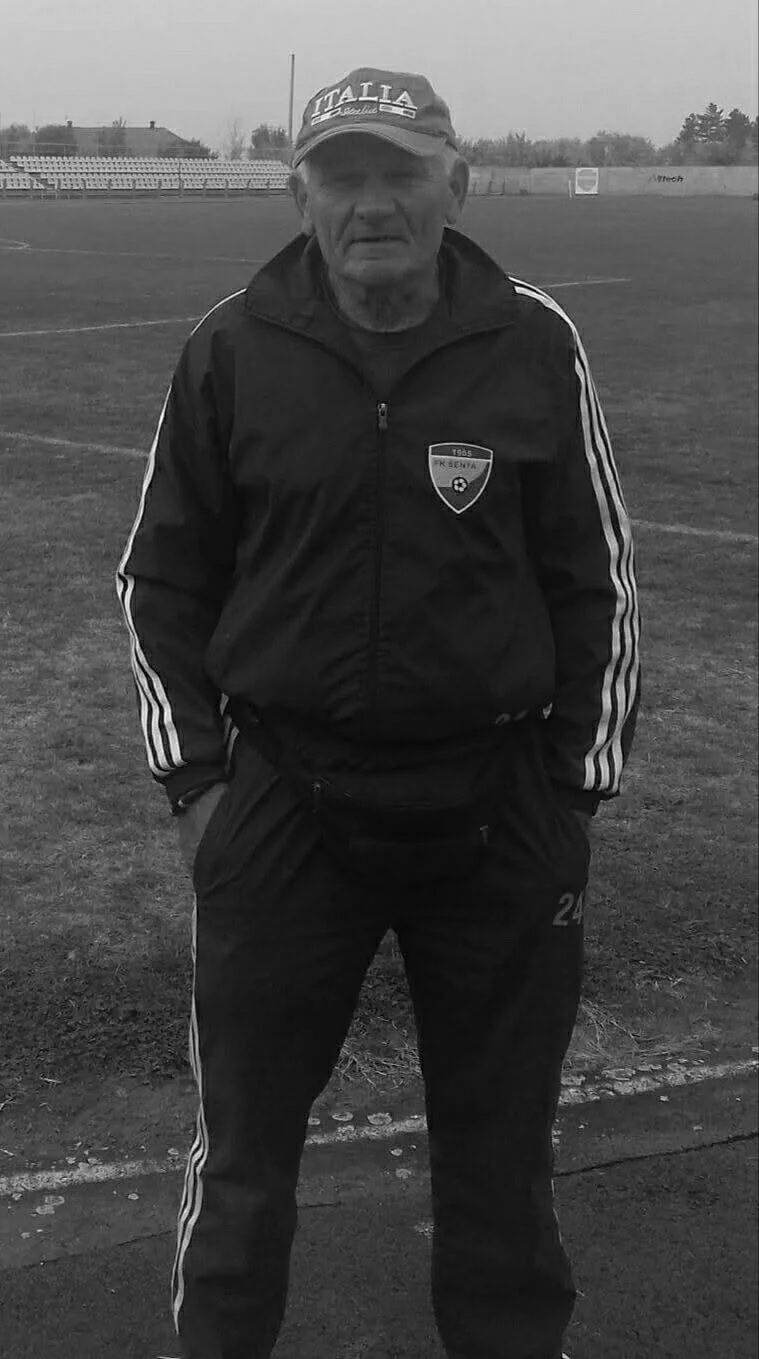
We must not forget Gyula Kovács, "Gyufi," either, who unfortunately is no longer with us.
He was the one who loved this club more than anything - as a player he was one of the unforgettable figures of the Kristal football team, and for the last 18 years he faithfully served Senta's team as a masseur, where he was loved by absolutely everyone.
But most people knew Gyufi as the greatest lover and supporter of Senta sport, because there was no sport, no match, to which he would not have come carrying Senta's flag, and it left him completely unmoved who the visiting team was - Gyufi always cheered Senta's teams and athletes on to victory.
Rest in peace.
Miklós Bognár

Miklós Bognár, a former player of Spartak and Hajduk of Kula, who began his career in Senta, was in his time a great hope of Yugoslav football.
Unfortunately, however, he suffered a fateful traffic accident in 1996, and has lived in a wheelchair ever since.
But Miklós did not give up, did not despair, did not resign himself to his fate - instead, together with his childhood friend Róbert Santo, likewise a former Spartak player, he started his own business.
The two of them are today co-owners of the You Go fashion brand, which manufactures and sells retro jerseys and T-shirts, and which is also one of our partners and sponsors.
We must also give thanks to Predrag Đurović, who for many years provided outstanding financial support to the club.
In addition, there are still very many players who could be listed, whose outstanding performances we are proud of - we will mention a few of them, and we apologize if we leave anyone out of the list:
Mladen Krstajić, Novak Roganović, István Bajusz, József Özvegy, Nemanja Nikolić, Miklós Bognár, Béla Rudics, Mihály Sóti, József Kitli... (the list is still growing)
The club's history does not end here - we have merely closed a chapter. Senta continues to live and grow, and we trust that its story will continue to be written in the decades to come.
We thank all the supporters, and the town of Senta itself, who have stood by the club across generations - without you, this story could never have come into being.
Football is a beautiful sport that teaches discipline, team spirit and perseverance. We encourage parents to bring their children to the club and give them a chance to discover this passion.
Please continue to follow our website, and follow us on Facebook and Instagram too, so you don't miss out on anything happening in the life of the club.
Thank you.